Itinerary
What to See in Palma in 1 Day
A 4.2 km walking route with 9 stops: the Cathedral in the morning, the old town and its markets at midday, and the sea at sunset
The centre of Palma can be entirely explored on foot. The route starts at the Cathedral, heads into the oldest neighbourhood, climbs past churches, squares and modernist facades to the Mercat de l'Olivar for lunch, and heads down the Born to the sea. It finishes at the Es Baluard walls and the Santa Catalina neighbourhood for dinner.
The day at a glance
- 10:001. Mallorca Cathedral (La Seu)
- 11:302. Banys Àrabs and the Sa Calatrava Neighbourhood
- 12:153. Basílica de Sant Francesc
- 12:504. Plaça de Cort and Plaça Major
- 13:305. Mercat de l'Olivar
- 15:006. Modernism: Gran Hotel and Plaça del Mercat
- 15:457. Passeig del Born and Sa Llotja
- 16:308. Es Baluard
- At sunset9. Santa Catalina Neighbourhood
Before you go
- The Cathedral's opening hours change depending on the season and the day of the week: check their website before you go.
- Es Baluard is closed on Mondays, and the Mercat de l'Olivar and Palau March are closed on Sundays: Tuesday to Saturday is best.
- Wear comfortable shoes: it is about 4.2 km, mostly along cobbled and pedestrianised streets.
- If you arrive by car, leave it in a public car park near the centre: the old town is almost entirely pedestrianised.
Morning
1. Mallorca Cathedral (La Seu)
Paid entry
Plaça de la Seu
10:00 · 1 h 15 min
Best to book a timed ticket
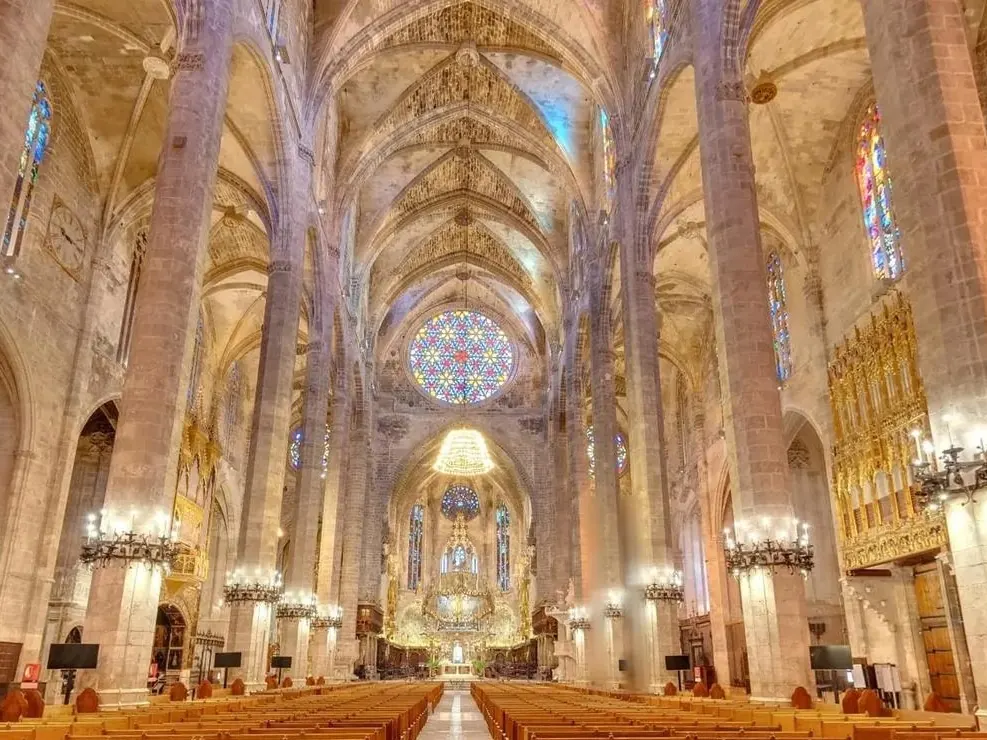
Gothic by the sea: Jaume I ordered its construction after conquering the island in 1229, and its main rose window is one of the largest in the Gothic world. Inside, you'll find two unexpected signatures: Gaudí, who renovated the presbytery in the early 20th century, and Miquel Barceló, who covered the Chapel of the Holy Sacrament in ceramics.
Tip: Arrive via the Parc de la Mar: the lake offers the classic photo of the cathedral above the city walls. Visiting hours change depending on the season and the day, so check the timetable on their website before you go. Next door is the Palau de l'Almudaina, the former royal palace.
Next stop: 6 min walk (0.4 km)
2. Banys Àrabs and the Sa Calatrava Neighbourhood
Streets free; Banys Àrabs, paid entry
Carrer de Can Serra, 7
11:30 · 40 min
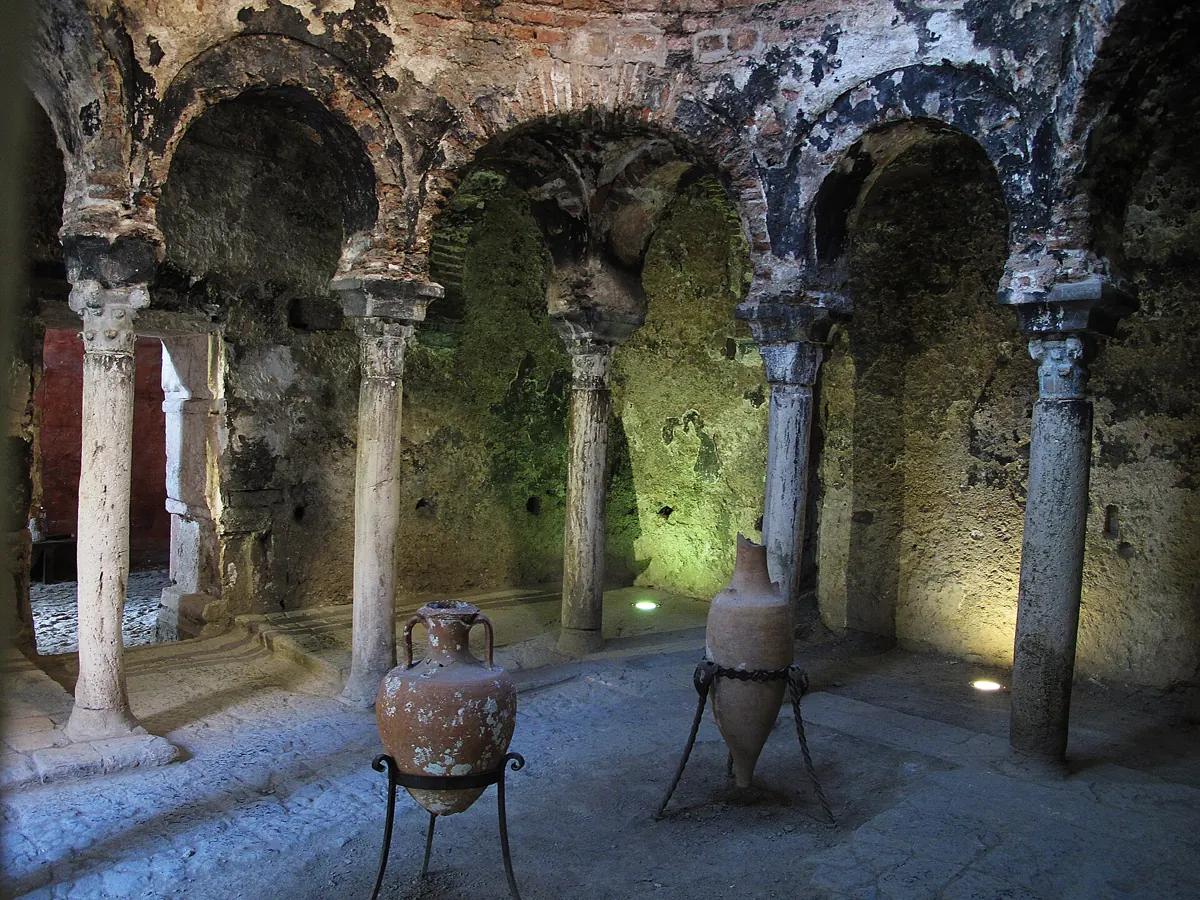
Sa Calatrava is the oldest corner of Palma: narrow streets, courtyards and convents built right against the city wall. The Banys Àrabs are one of the few remaining traces of the Muslim Madina Mayurqa, featuring a domed room with horseshoe arches surrounded by a garden.
Tip: Climb up to the city wall via the Dalt Murada promenade to see the bay and the cathedral from above. The Banys Àrabs are small: 15 minutes is enough.
Next stop: 5 min walk (0.3 km)
3. Basílica de Sant Francesc
Paid entry
Plaça de Sant Francesc, 7
12:15 · 30 min
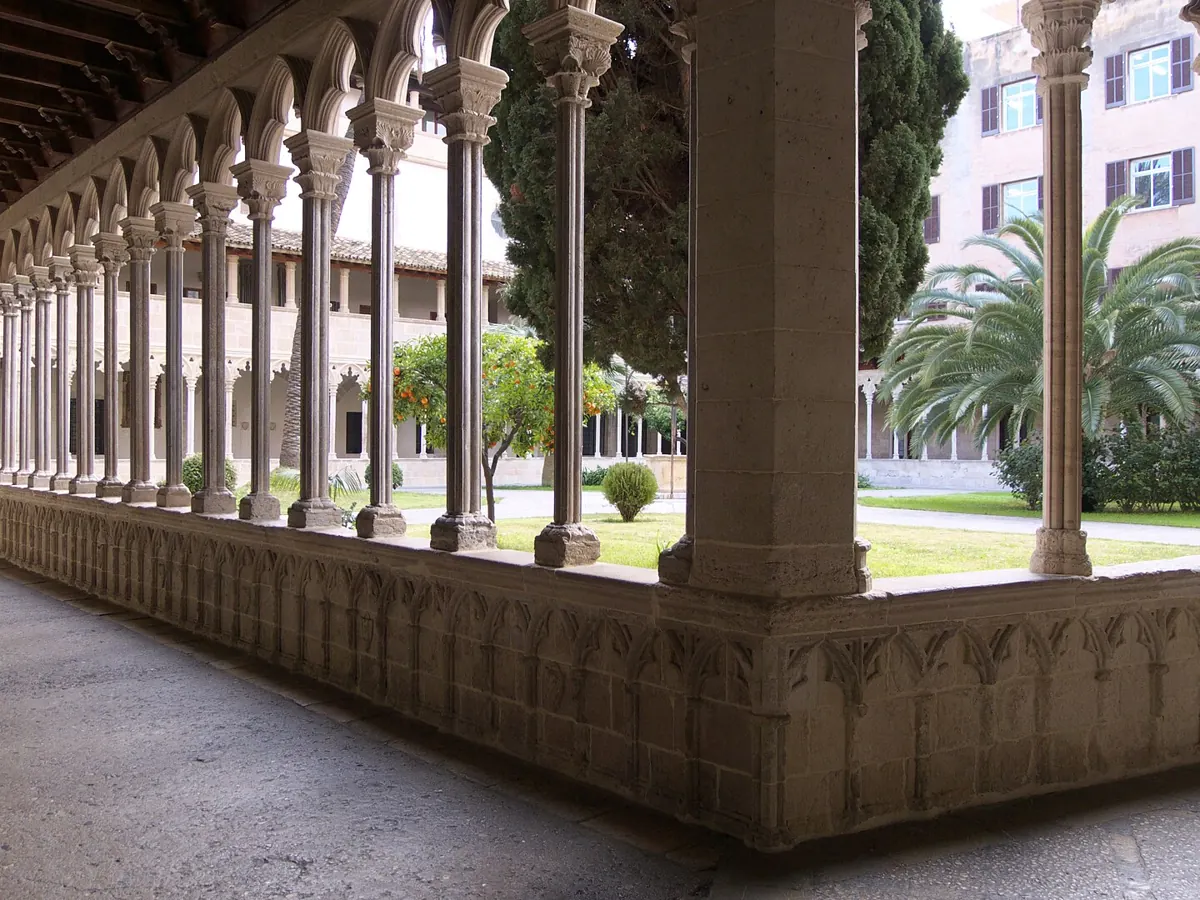
A 13th and 14th-century Gothic church with one of the most beautiful cloisters in the city. Inside is the tomb of Ramon Llull, the great Mallorcan thinker, and in the square stands the statue of Fray Junípero Serra, the friar from Petra who founded the California missions.
Tip: The cloister requires a ticket; the facade and the square are free to see. If you are short on time, just take a quick look at the cloister and move on.
Next stop: 5 min walk (0.3 km)
Midday
4. Plaça de Cort and Plaça Major
Free
Plaça de Cort
12:50 · 30 min
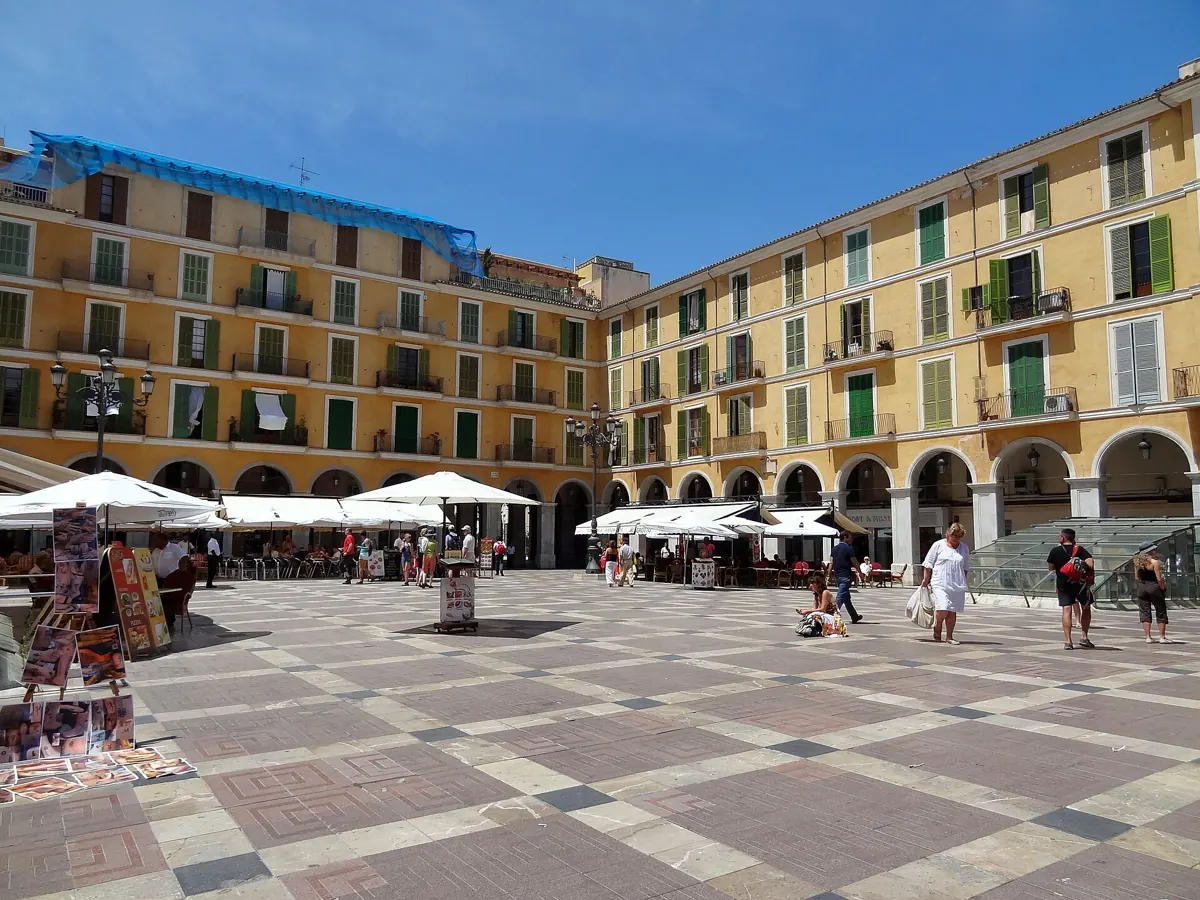
In Cort you will find the Town Hall, with its carved wooden eaves, and in front of it, a centuries-old olive tree with a twisted trunk that is one of the most photographed trees in Palma. Two minutes away, in Plaça Marquès del Palmer, Can Forteza Rey showcases the city's wildest Modernist architecture, featuring faces and a ceramic dragon. The arcaded Plaça Major is the classic traditional square.
Tip: Look up: on Colom and Jaume II streets, there are Modernist facades and glass-enclosed balconies on almost every corner.
Next stop: 9 min walk (0.7 km)
5. Mercat de l'Olivar
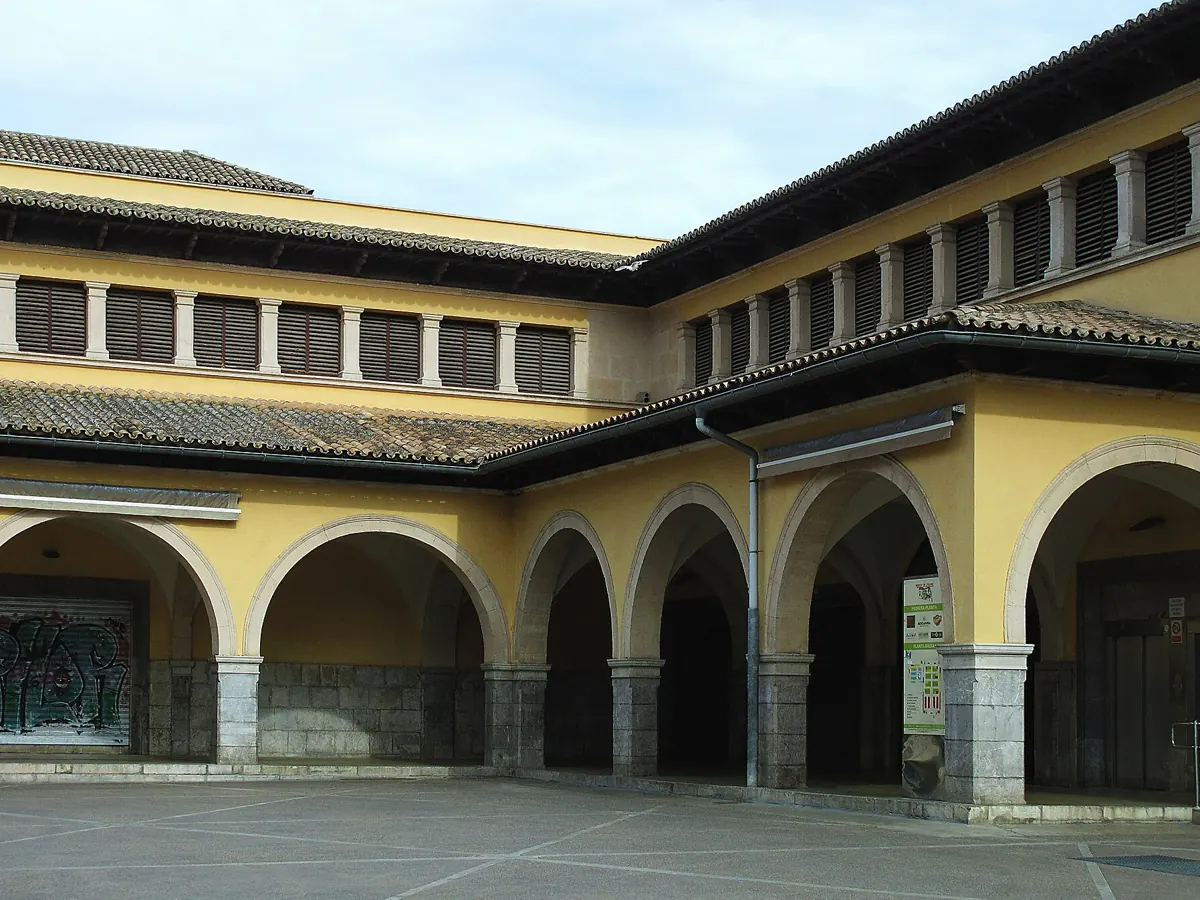
Free entry
Plaça de l'Olivar, 4
13:30 · 1 h 15 min
The largest market in Palma: fresh fish from the exchange, sobrasada, cheeses, ensaimadas and local island fruit. Its tapas bars are the simplest and most authentic place to eat in the centre.
Tip: Closed on Sundays. From Monday to Friday it opens from 7:00 to 14:30 (some stalls stay open in the afternoon), on Saturdays until 15:00, and the food court is open from Monday to Saturday until 16:00.
Next stop: 8 min walk (0.6 km)
Afternoon
6. Modernism: Gran Hotel and Plaça del Mercat
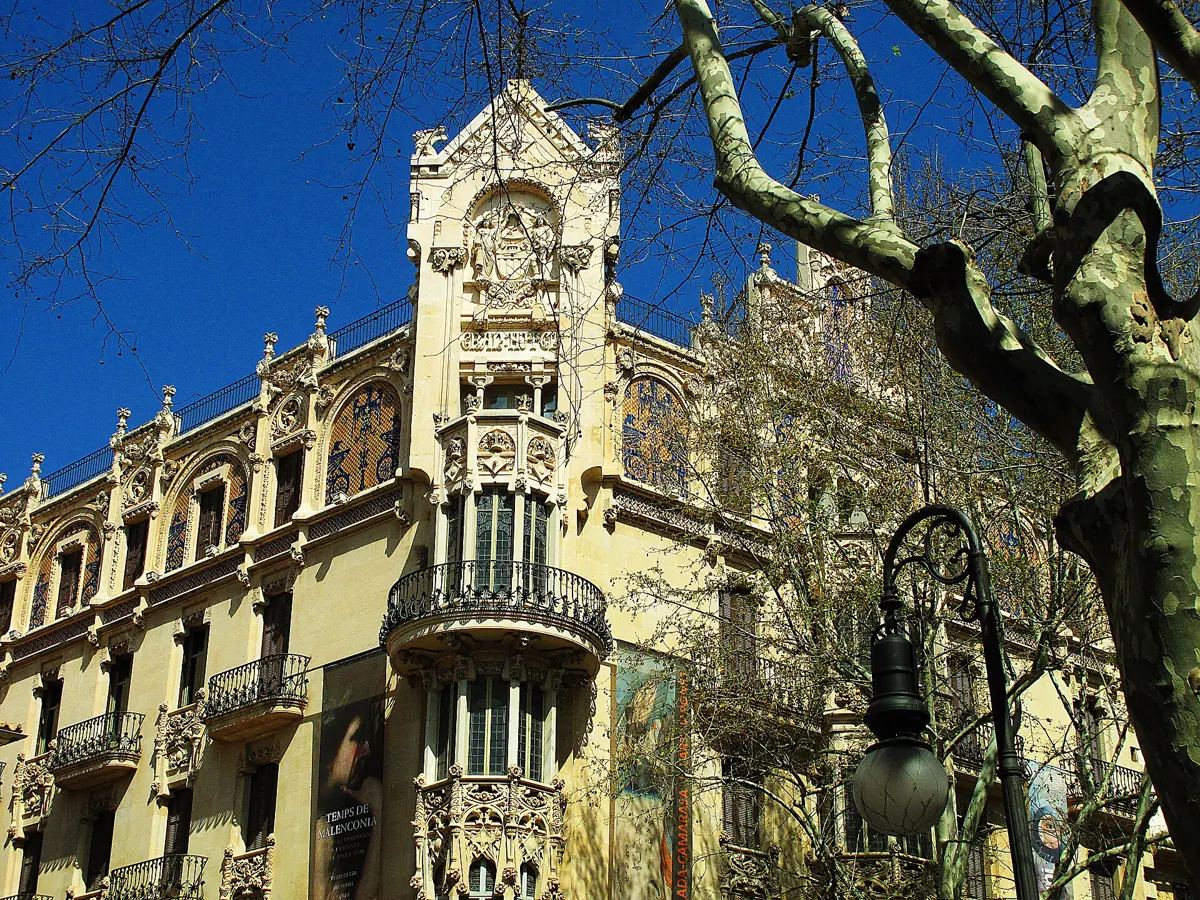
Free
Plaça de Weyler, 3
15:00 · 30 min
The Gran Hotel, designed by Domènech i Montaner (1903), was the island's first major luxury hotel and is now CaixaForum, hosting temporary exhibitions. Opposite, the Forn des Teatre retains its wooden facade, and in Plaça del Mercat you can see the twin houses of Can Casasayas, with their undulating facades.
Tip: From here, walk down La Rambla or Carrer de la Unió to the Born.
Next stop: 11 min walk (0.8 km)
7. Passeig del Born and Sa Llotja
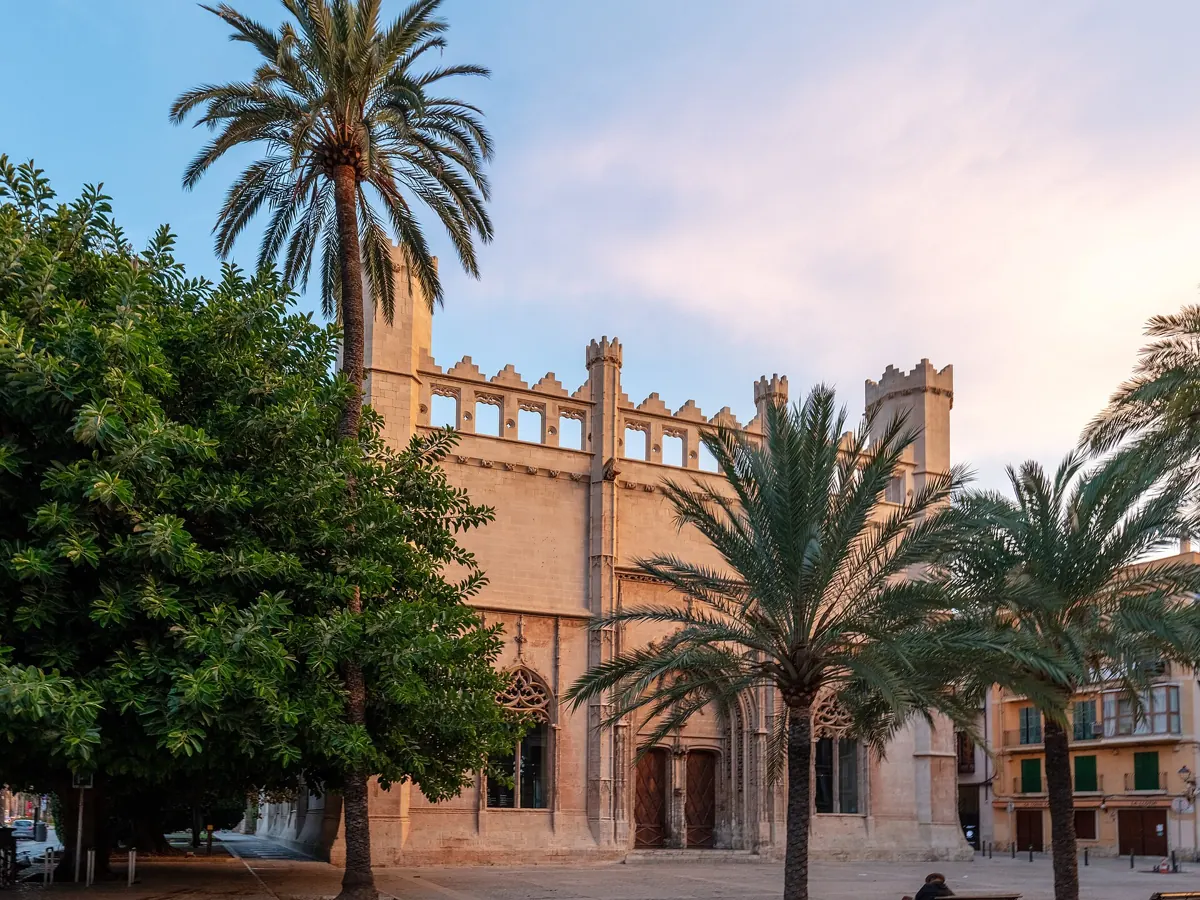
Free
Plaça de la Llotja
15:45 · 45 min
The Born is Palma's living room: a promenade lined with plane trees, benches and mansions leading down to the sea. At the end stands Sa Llotja, the old 15th-century merchants' exchange designed by Guillem Sagrera: it features corner towers and, inside, spiral columns that open up like palm trees.
Tip: The interior of Sa Llotja is only open during exhibitions: if the doors are open, go inside. The surrounding neighbourhood is full of pedestrian streets perfect for a wander.
Next stop: 5 min walk (0.4 km)
8. Es Baluard
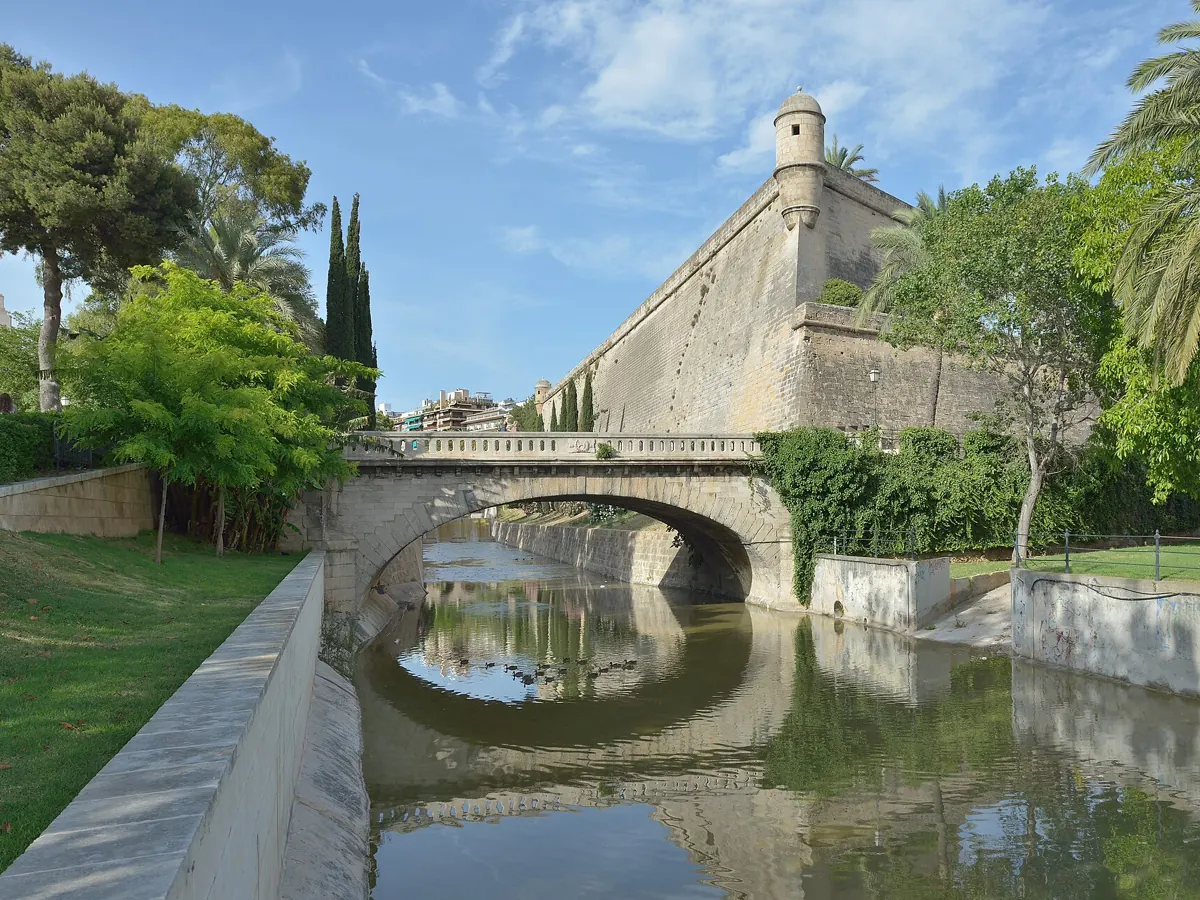
6 €
Plaça de la Porta de Santa Catalina, 10
16:30 · 1 h 15 min
Palma's contemporary art museum, housed inside a Renaissance bastion of the city wall. The collection features Miró, Picasso and Barceló, but the best part is the building itself: terraces over the bay with views of the Cathedral, the port and Bellver Castle.
Tip: Closed on Mondays. Open Tuesday to Saturday from 10:00 to 20:00 and Sunday from 10:00 to 15:00. On Fridays, it is pay-what-you-wish. In winter, at this time you will catch the sunset from the terraces.
Next stop: 9 min walk (0.7 km)
Sunset and night
9. Santa Catalina Neighbourhood
Free
Mercat de Santa Catalina
At sunset · As long as you like
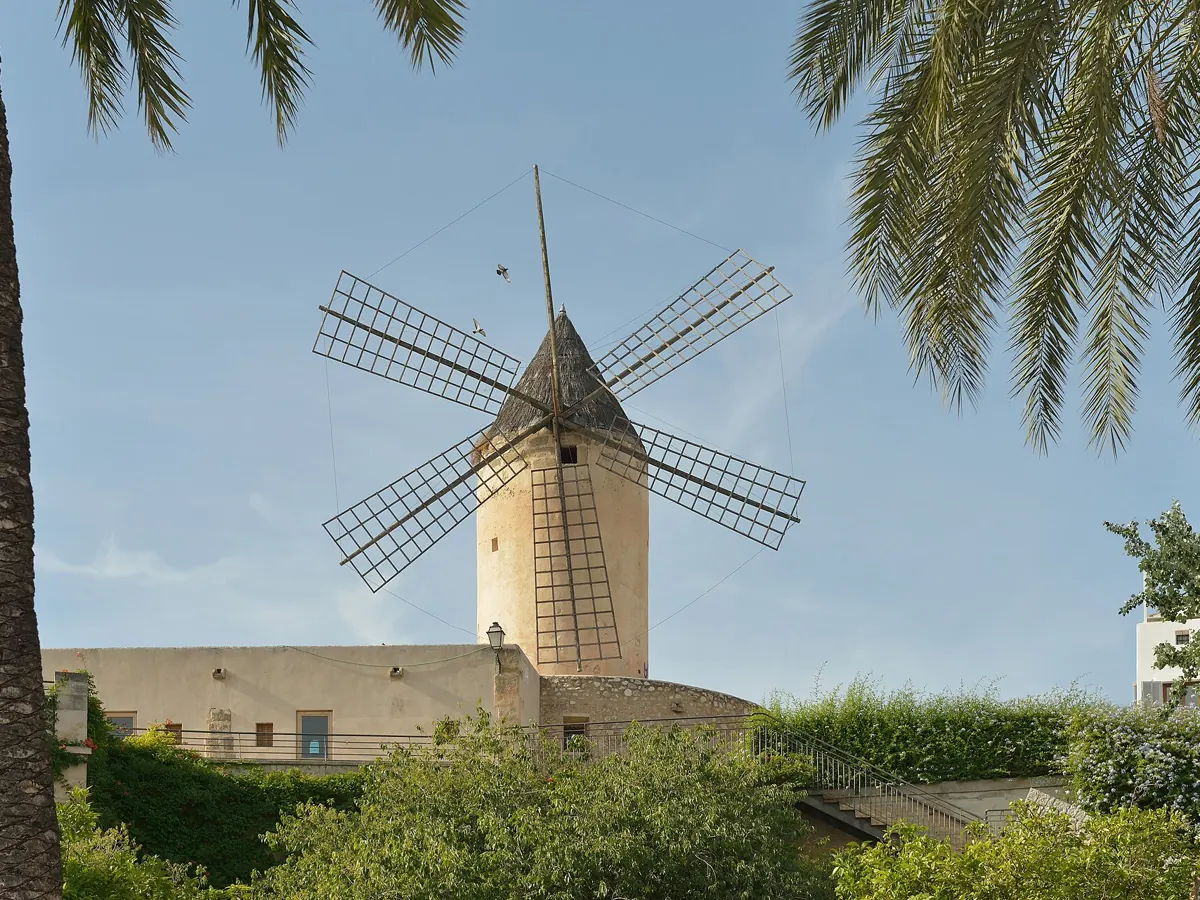
The old fishermen and sailors' neighbourhood, just outside the city walls, is now the liveliest spot for dinner: streets of low houses, its market and, just a stone's throw away, the Es Jonquet windmills overlooking the port.
Tip: For dinner, the neighbourhood has everything within a few streets; book ahead if it is the weekend. The Es Jonquet windmills are five minutes away and offer great views of the port at night.
If you have time to spare
- Bellver Castle. One of the few circular Gothic castles in Europe, set in a forest above Palma, overlooking the entire bay. From October to March it is open Tuesday to Saturday from 8:30 to 18:00, Sunday from 10:00 to 18:00, and Monday mornings only. 4 €.
- Fundació Miró Mallorca. The studios where Joan Miró painted for his last thirty years, in Cala Major, 15 minutes from the centre. Closed on Mondays. 6 €; free on Saturdays.
- Royal Palace of La Almudaina. The royal palace next to the Cathedral, a former Moorish fortress and residence of the Kings of Mallorca. Ticket required; check opening hours on their website.
More itineraries in Mallorca
Photos from Wikimedia Commons: Banys Àrabs and the Sa Calatrava Neighbourhood (Enric, CC BY-SA 4.0); Basílica de Sant Francesc (José Luis Filpo Cabana, CC BY 3.0); Plaça de Cort and Plaça Major (Olaf Tausch, CC BY 3.0); Mercat de l'Olivar (Enric, CC BY-SA 4.0); Modernism: Gran Hotel and Plaça del Mercat (Enric, CC BY-SA 4.0); Passeig del Born and Sa Llotja (Diego Delso, CC BY-SA 4.0); Es Baluard (Wolfgang Moroder, CC BY-SA 3.0); Santa Catalina Neighbourhood (Wolfgang Moroder, CC BY-SA 3.0).